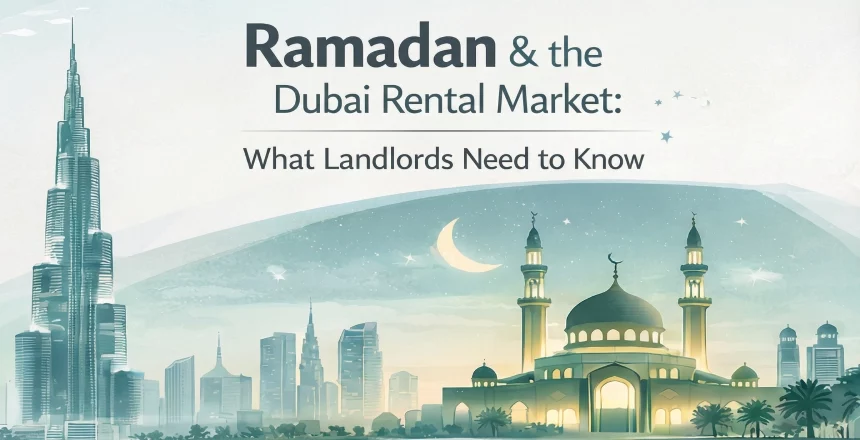
Every year, the same question comes up from landlords across Dubai as Ramadan approaches.
“Should I pause my listing? Will tenants even be looking? Is this a dead month for rentals?”
The short answer is no.
The more useful answer is that Ramadan does not stop Dubai’s rental market. It changes its rhythm. And landlords who is not paying attention can, in many ways, misread that rhythm often making the wrong decisions at the wrong time.
This article explains what typically happens to leasing activity during Ramadan, why the period immediately after Eid matters so much, and what practical steps landlords should take to protect returns and avoid unnecessary vacancies.
1. The Myth of the Ramadan Slowdown
Let us address this directly, because it shapes how a lot of landlords behave during the holy month.
Yes, Ramadan changes the pace of daily life in Dubai. Working hours are shorter. Mornings are quieter. Social rhythms shift to the evenings. And it is true that some landlords assume this means the rental market simply stops.
The data says otherwise.
Dubai property market data tells a clear story. Transactions during Ramadan 2024 rose 39% compared to Ramadan 2023, reaching 12,313 transactions with a total sales value of AED 32.6 billion. By Ramadan 2025, that figure had climbed further to AED 37.5 billion in transaction value, with transaction numbers reaching 14,386 over the same period. Industry forecasts for Ramadan 2026 point to a further 8 to 12% increase in activity compared to last year.
This is not a market that is sleeping. It is a market that has shifted its hours.
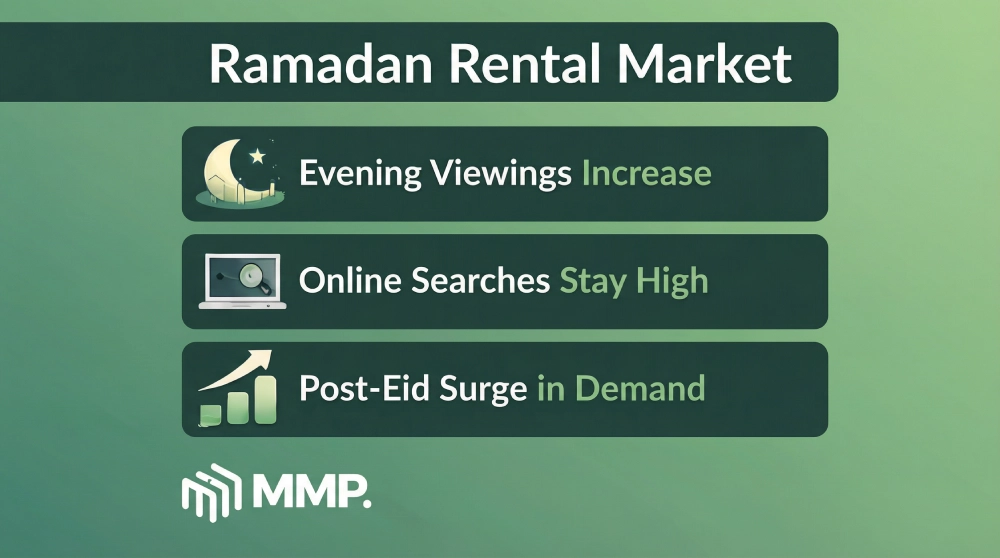
Key insight: During Ramadan, property viewings typically move to the evening, after iftar. Serious buyers and tenants who are genuinely committed to a decision tend to dominate this window. The casual browsers drop off. The motivated ones stay. For landlords with well-presented, well-priced properties, this is actually a more qualified audience than a typical weekday morning in October.
2. What Actually Happens to Rental Demand During Ramadan
The picture for the rental market specifically is more nuanced than the sales data suggests. Here is what typically happens across the holy month:
In the first week or two, there is a genuine slowdown in new lease signings as residents adjust to the new daily rhythm. Viewings slow during daytime hours. Decision-making takes slightly longer as people are more focused on family, faith, and community.
Screen time, however, increases significantly. Dubai market research has found that users increase screen time by up to three hours a day during Ramadan. Property portals, listings, and rental searches do not go quiet during this period. Tenant research continues actively online, which means the pipeline of interested parties keeps building even when physical viewings dip.
From around the second or third week, activity picks back up, particularly in the evening hours. Post-iftar viewings become the norm, and landlords who have adapted their availability to this schedule report no meaningful loss in leasing momentum.
Then comes Eid, and everything accelerates.
Landlord tip: If you have a property sitting vacant during Ramadan, do not drop the price out of impatience. The post-Eid surge typically arrives within days of the holiday and represents one of the strongest leasing windows of the year. Panic pricing during Ramadan can lock you into a below-market lease just before demand spikes.
3. The Post-Eid Surge: The Window Landlords Should Be Ready For
This is the part of the Ramadan calendar that matters most to landlords, and the part that is most often underestimated.
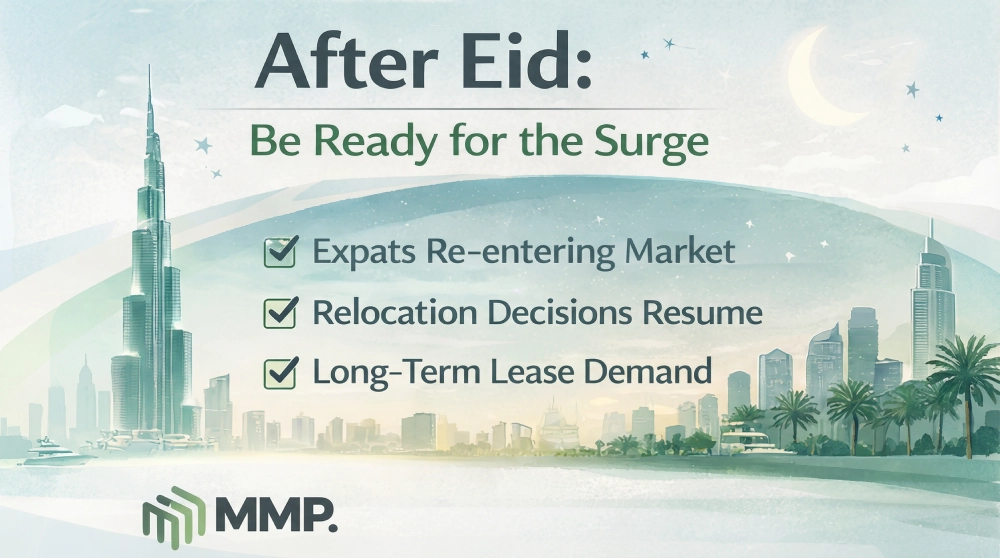
In the days and weeks following Eid al-Fitr, Dubai’s rental market typically experiences a sharp and fast-moving surge in activity. The reasons are structural:
- Expats who delayed relocation decisions during Ramadan return to the market with active urgency, as lease start dates are tied to their employment and school calendars
- New residents who arrived in Dubai during the first quarter are ready to commit to long-term leases after completing their initial settling-in period
- Families making school-year decisions lock in residential leases ahead of the new academic term
- Corporate relocations that were paused during the holy month resume at pace
Rental demand after Eid can increase noticeably, particularly for well-maintained properties in established communities. Landlords who have kept their properties well presented and their pricing aligned with the market during Ramadan are in a strong position to capture this wave immediately.
Those who neglected maintenance, mispriced their units, or went dark during Ramadan often find themselves scrambling to re-enter a market that has already moved on.
4. How Ramadan 2026 Is Different From Previous Years
Ramadan 2026 falls in early March, which places it in a particularly favourable position in the annual property calendar. Unlike Ramadans that fall in June, July, or August, a March Ramadan means:
- March weather in Dubai is generally comfortable, with commonly cited average temperatures around the high teens to high twenties Celsius, which makes evening viewings easier and more attractive than in summer. That matters.
- There are no summer travel disruptions or school holiday overlaps to compete with
- Post-Eid falls in early April, which is historically one of the strongest months for residential leasing in Dubai
The broader rental market context in 2026 is also worth noting. Average residential rents in Dubai rose by around 17% in 2025 according to market data from major property consultancies, but growth is now moderating. Rental increases of 4 to 6% are expected in select high-demand areas in 2026, with some mid-market apartment segments beginning to flatten as new supply enters the market. This means landlords operating in 2026 need to be more strategic than in previous years. Ramadan is not the time to be passive.
5. The Seasonal Calendar Every Dubai Landlord Should Know
Ramadan sits within a broader annual pattern of tenant demand that affects every landlord’s returns. Understanding where Ramadan falls in that pattern is essential for planning:
| Period | Activity Level | Key Driver | Landlord Implication |
| Ramadan (March 2026) | Slightly slower viewings in daytime | Evening viewings post-iftar remain active | Developers offer incentives and flexible payment plans |
| Post-Eid (April 2026) | Sharp surge in transactions | Expats returning, new residents entering | Strong demand for long-term leases resumes |
| Summer (June to August) | Lowest demand period of the year | Overseas travel, school holidays, heat | Landlords competes more aggressively on price |
| September to November | Peak leasing season | New school year, corporate relocations | Best conditions to secure quality long-term tenants |
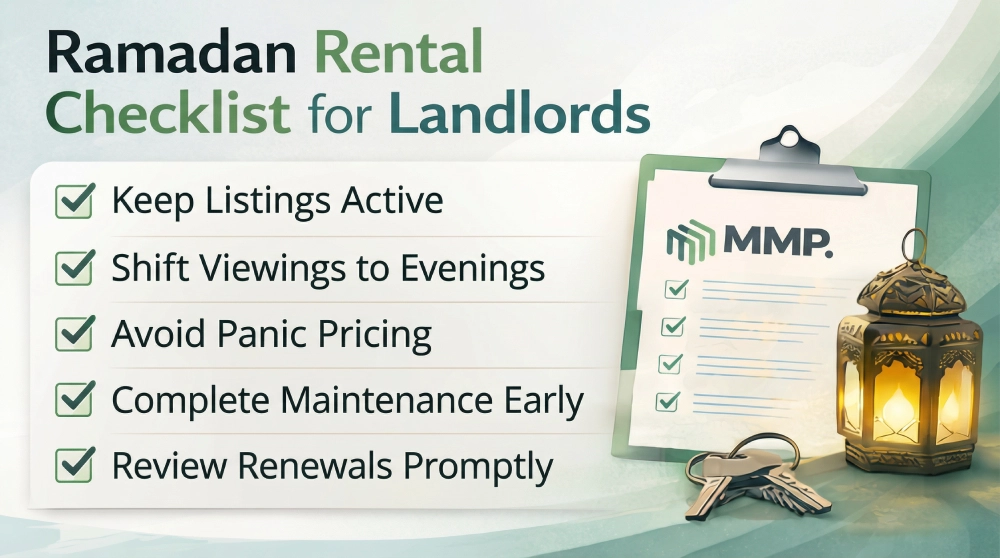
The practical implication of this calendar is clear. Ramadan in March 2026 is not a period to go quiet. It is a period to prepare. The landlords who use the slightly slower pace of early Ramadan to refresh their listings, complete outstanding maintenance, and ensure their property is in market-ready condition will be the ones who close quickly after Eid, often on the same day demand returns.
6. What Good Property Management Looks Like During Ramadan
For landlords managing their own properties, Ramadan introduces specific challenges that can cost money if not handled correctly:
- Maintenance requests from existing tenants do not pause during Ramadan, but contractor availability can be reduced. Response times need to be managed actively to avoid lease disputes
- Tenant renewals that fall due during Ramadan require careful handling. Sending a renewal notice at the wrong time, or at the wrong price, during a period when tenants are more likely to defer decisions, can result in unnecessary vacancies
- New listings need to be optimised for evening and weekend viewings rather than the standard weekday schedule
- Communication with tenants should be respectful of fasting hours, which means avoiding early morning or midday calls for non-urgent matters
A professionally managed property by a RERA-certified asset manager handles all of this as standard. Maintenance is coordinated proactively. Renewal conversations are timed correctly. Listings are priced and positioned based on live market data, not assumptions. And viewings are scheduled around the rhythms of the holy month without the landlord needing to be available at all hours.
The MMP management fee is not just for the months when the market is easy. It is precisely for periods like Ramadan, when the details matter most and getting them wrong has a direct cost.
The Bottom Line
Ramadan is not a pause in Dubai’s rental market. It is a shift in rhythm. The landlords who understand this, and who manage their properties accordingly, tend to emerge from the post-Eid window with strong leases in place while others are still trying to catch up.
In 2026, with Ramadan falling in March and Eid arriving in early April, the timing is genuinely favorable. Pleasant weather, a market coming off strong January activity, and a well-established post-Eid surge in demand make this an opportunity rather than an obstacle.
The question is not whether tenants are looking during Ramadan. They are.
The question is whether your property is ready for them when they are.
Speak to an MMP Property Manager today: wa.me/971581177638