– 6 min read
The security deposit is one of the most common sources of dispute between landlords and tenants in Dubai. For tenants, it represents a significant sum — typically 5 to 10% of the annual rent — that should be returned once the tenancy ends. For landlords, it is protection against damage, unpaid rent, and the cost of restoring a property to its original condition.
The problem is that what can and cannot be deducted is often misunderstood by both sides. This guide explains the rules clearly: how much the deposit should be, what deductions are legally permitted, how long a landlord has to return it, and exactly what to do if there is a dispute.
How Much Is the Security Deposit in Dubai?
The amount of the security deposit in Dubai is governed by the Dubai Rental Law and RERA regulations. There is no legal maximum, but standard market practice and regulatory guidance sets clear norms:
Property Type | Deposit Amount | Notes |
Unfurnished apartment or villa | 5% of annual rent | Standard rate for most residential tenancies |
Furnished apartment or villa | 10% of annual rent | Higher rate reflects contents and furnishing risk |
Commercial property | Varies — typically 5–10% | Agreed at contract stage |
The deposit is paid at the time of signing the tenancy contract. It is held by the landlord (or their management company) throughout the tenancy and must be returned — in full or with documented deductions — at the end of the lease.
Important: The deposit belongs to the tenant. The landlord holds the deposit as a custodian, not as income. It cannot be used for maintenance, upgrades, or any purpose unrelated to documented damage or unpaid obligations by the tenant at the time of exit. |
What Can a Landlord Legally Deduct?
This is where most disputes begin. The rules are clear, but frequently misapplied. Here is exactly what is permitted and what is not:
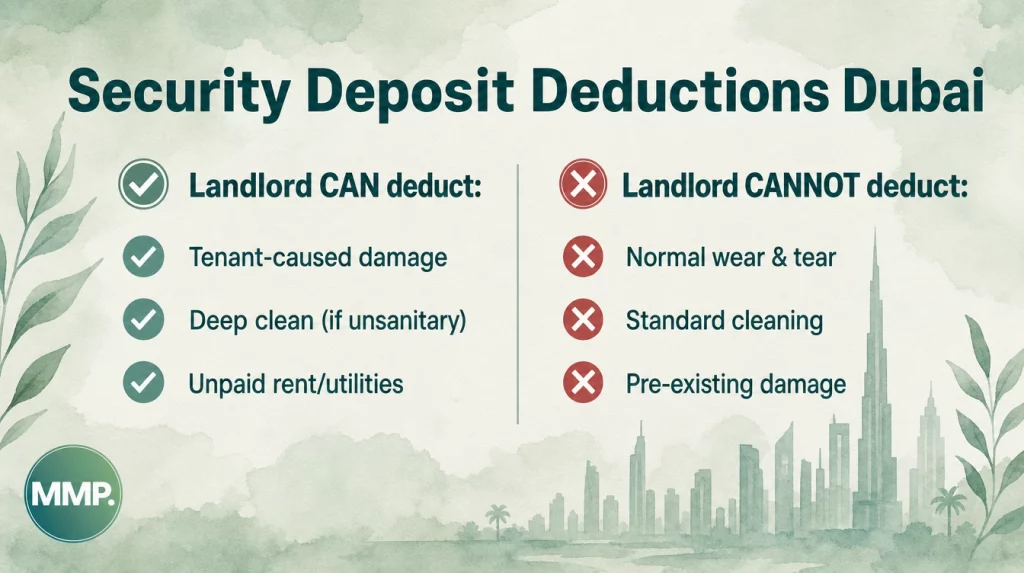
✓ Landlord CAN legally deduct | ❌ Landlord CANNOT deduct |
Cost to repair damage caused by the tenant (beyond fair wear and tear) | Normal wear and tear — scuffs, minor marks, faded paint |
Replacement of items damaged or broken by the tenant | Damage that existed before the tenant moved in |
Deep cleaning if the property was left in unsanitary condition | Standard cleaning after a normal tenancy |
Outstanding rent or utilities unpaid at time of exit | Items not documented in the move-in condition report |
Cost to replace items listed in the inventory that are missing | Improvements or upgrades the tenant made to the property |
The critical concept here is fair wear and tear. Dubai’s rental law recognises that normal use of a property over the course of a tenancy will result in some level of deterioration — scuffs on walls, minor marks on floors, faded curtains. This is not the tenant’s financial responsibility. A landlord who attempts to deduct for these items is not acting within their legal rights.
The move-in condition report is everything. If no condition report was completed at move-in — with photographs — a landlord has very limited grounds to claim damage was caused by the tenant. Any damage that cannot be shown to have occurred during the tenancy cannot be legally deducted from the deposit. Tenants: always request and sign a photographic condition report on the day you move in. |
How Long Does the Landlord Have to Return the Deposit?
Dubai’s rental law does not specify an exact number of days for deposit return, but standard practice and RERA guidance requires it to be returned promptly after the tenancy ends and the property is handed back in good condition.
In practice, the process works like this:
- Tenant completes the move-out inspection with the landlord or management company
- Property condition is assessed against the move-in report
- Any legitimate deductions are identified and documented with evidence and cost estimates
- Remaining deposit balance is returned — typically within 7 to 30 days of the move-out date
If a landlord is making deductions, they must provide an itemised breakdown showing exactly what is being claimed and why. A vague reference to “damages” without documentation is not sufficient grounds for any deduction.
What to Do If Your Landlord Is Withholding the Deposit
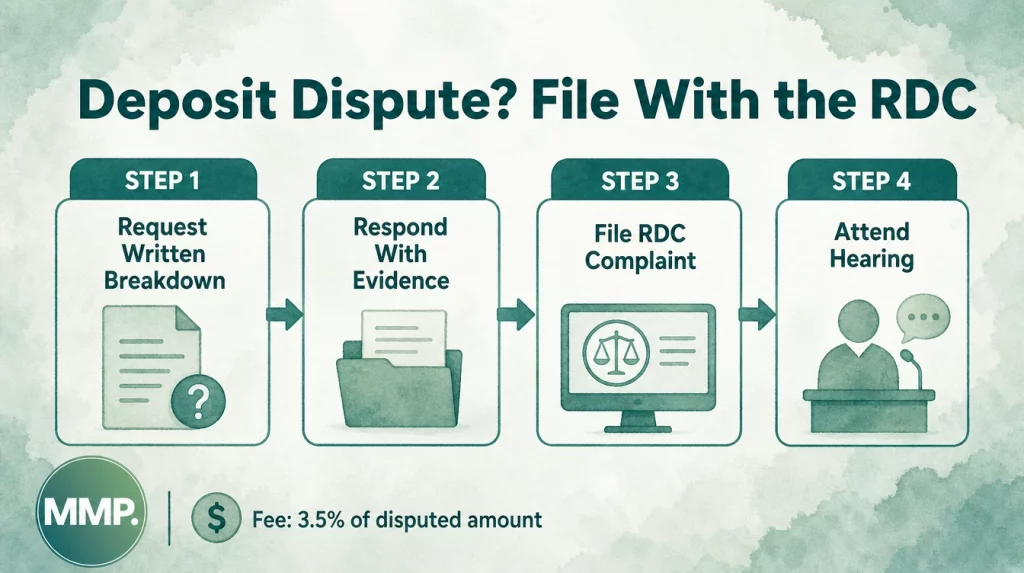
If a landlord refuses to return the deposit or is making deductions you believe are unjustified, you have a clear legal path available in Dubai. Here is what to do in order:
- Request a written breakdown
Ask the landlord or their management company to provide a full itemised list of any deductions they intend to make, with supporting evidence (photographs, invoices, contractor quotes). This gives you a documented starting point for any dispute.
- Respond in writing
If you disagree with any claimed deductions, respond in writing with your objections and any evidence you have — your own photographs, the move-in condition report, any communications confirming the property’s condition. Keep all correspondence.
- File a complaint with the Rental Dispute Centre (RDC)
If direct resolution fails, the Rental Dispute Centre (RDC) handles all landlord-tenant disputes in Dubai, including deposit disputes. You can file a complaint online or in person. The RDC process is structured and relatively straightforward, and does not always require a lawyer. For more complex cases or where the amounts are significant, legal representation for landlords and tenants can be arranged through MMP.
- Attend the RDC hearing
The RDC will schedule a hearing and both parties present their case. Bring all documentation: your tenancy contract, move-in and move-out condition reports, photographs, correspondence, and payment records. The RDC issues a binding ruling.
RDC filing fee Filing a deposit dispute with the Rental Dispute Centre costs 3.5% of the disputed amount (minimum AED 500, maximum AED 20,000). This is typically recoverable if the ruling goes in your favour. |
What Landlords Need to Know
For landlords, the security deposit is a protection — but only if the tenancy was managed correctly from the beginning. The most common reason landlords lose deposit disputes is not having adequate documentation.
- Always complete a photographic move-in condition report and have the tenant sign it on the day they take possession
- Keep all communications in writing throughout the tenancy
- Get itemised quotes from contractors before making any deductions — estimates are not sufficient
- Return the deposit promptly after exit and document any deductions in writing with evidence
- Never withhold a deposit without documented justification — the RDC process works against landlords who cannot produce evidence
Structured lease enforcement and tenancy compliance throughout the tenancy is what protects landlords at the end of it. The documentation built up during a properly managed tenancy — inspection reports, condition records, maintenance logs — is exactly what resolves deposit disputes quickly and in the landlord’s favour.
The Bottom Line
Dubai’s security deposit rules are clear and protect both parties — but only when the tenancy has been managed with proper documentation from start to finish. For tenants, the key protection is a signed move-in condition report and keeping records throughout. For landlords, it is exactly the same.
Disputes almost always come down to documentation. A professionally managed property — with structured inspection reports, condition records, and formal communication throughout — rarely ends in a deposit dispute. MMP’s professional property management in Dubai includes move-in and move-out photographic reports as standard, which is how our clients avoid this type of dispute entirely.
In a deposit dispute or want to prevent one? MMP’s certified property managers and legal coordination team can advise on your specific situation — whether you’re a landlord or tenant. |
Frequently Asked Questions
Can a landlord keep the full deposit if I break the lease early?
Not automatically. Early termination clauses vary by contract. Some contracts include a specific penalty for early exit. Where no clause exists, the landlord may claim for actual losses caused by the early termination — such as the cost of re-letting the property — but cannot simply retain the entire deposit without justification.
Does the landlord have to pay interest on the deposit?
No. Dubai rental law does not require landlords to pay interest on security deposits held during the tenancy.
What if the landlord claims the property needs full repainting?
Repainting due to normal wear and tear is a landlord’s responsibility and cannot be deducted from the deposit. If there is specific damage beyond normal use — large holes, staining, unauthorised painting — a proportional deduction may be justified, but not the full cost of repainting an entire property.
Can the landlord use the deposit to cover unpaid service charges?
Only if the tenancy contract explicitly makes the tenant responsible for service charges and those charges are documented as outstanding at the time of exit.
What if I never received a move-in condition report?
This significantly weakens the landlord’s position in any deposit dispute. Without documented evidence of the property’s condition at the start of the tenancy, any claimed damage is very difficult to substantiate. If you are a tenant in this situation, document the property’s current condition thoroughly with photographs and raise the issue with the landlord or management company in writing.